

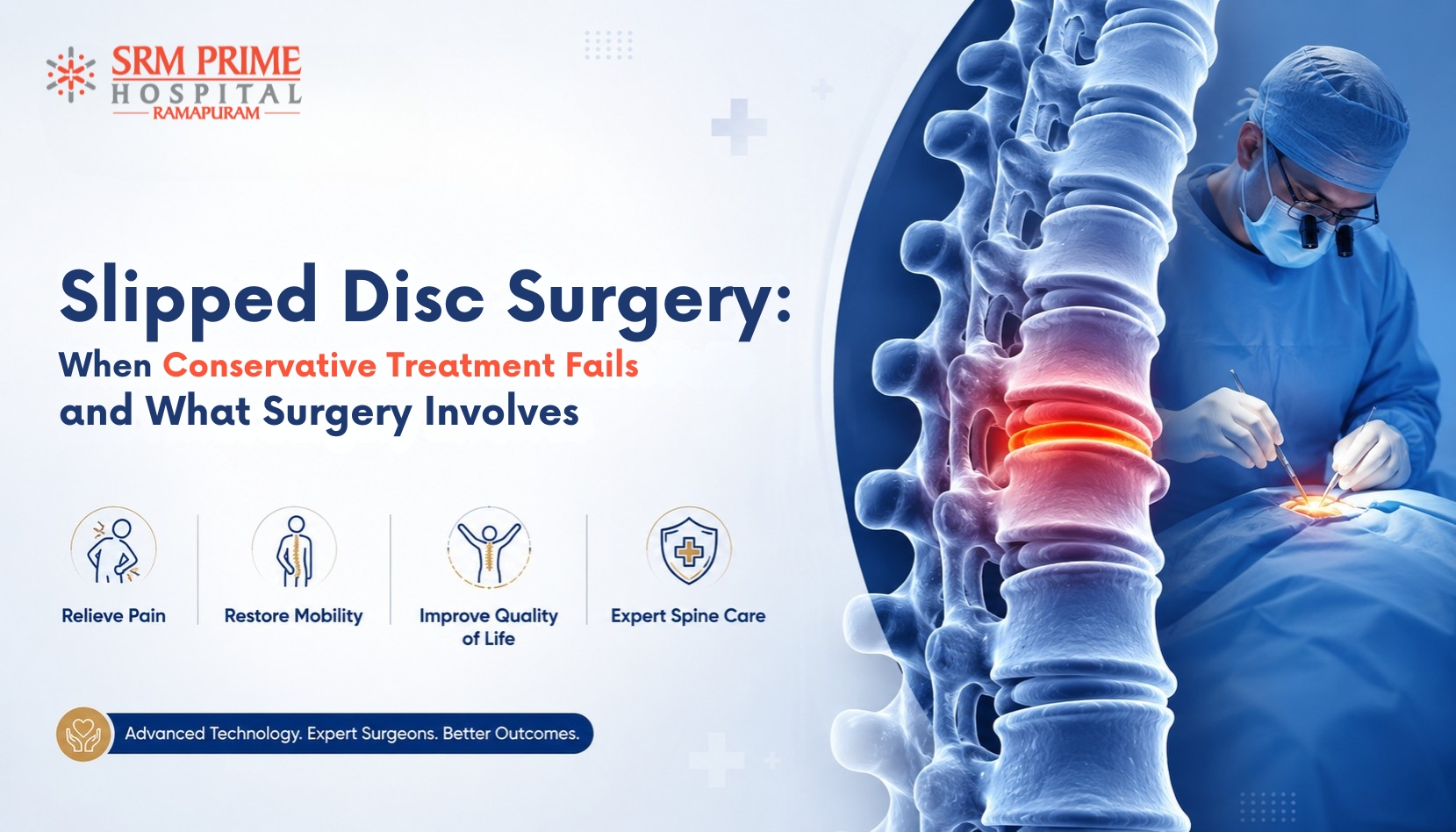
Spinal fusion is one of the most misunderstood surgical procedures. Patients are often concerned that fusing vertebrae will make the spine completely rigid, limit movement, or lead to a lifetime of problems. This guide provides clear, honest information about what spinal fusion actually does, when it is genuinely needed, and what to realistically expect from the procedure and recovery.
Key Takeaways
- Spinal fusion joins two or more vertebrae together to eliminate painful movement at an unstable or damaged spinal segment
- Fusion does not make the whole spine rigid — most patients notice little difference in day-to-day movement
- It is recommended for spondylolisthesis, severe degenerative disc disease, spinal instability, and deformity
- Recovery is longer than discectomy — typically 3–6 months before returning to physical work
- Bone graft (your own bone or a synthetic substitute) and metal instrumentation (rods, screws) are used to achieve fusion
When Is Spinal Fusion Recommended?
- Spondylolisthesis — one vertebra slipping forward on another, causing instability and nerve pain
- Degenerative disc disease with spinal instability — painful motion at a worn disc segment that has not responded to conservative care
- Spinal stenosis with instability — narrowing of the spinal canal that requires decompression plus stabilisation
- Spinal deformity — scoliosis or kyphosis that requires correction and stabilisation
- Spinal fracture — traumatic vertebral fracture requiring stabilisation
- Failed previous spinal surgery — revision surgery where the spine has become unstable
How Spinal Fusion Works
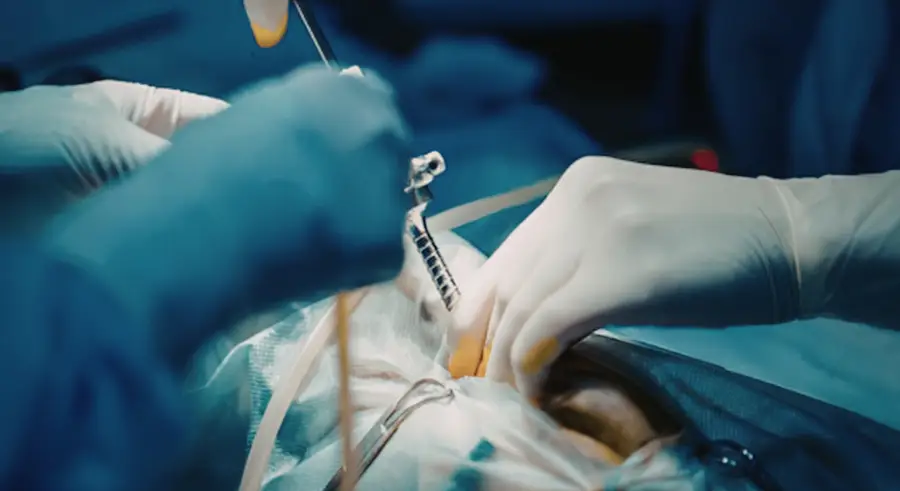
Spinal fusion surgery uses bone graft material — either harvested from the patient's own iliac crest (hip), from a bone bank, or synthetic bone substitute — placed between or around the vertebrae being fused. Metal screws and rods (instrumentation) hold the vertebrae in the correct position while the bone graft slowly grows and fuses the two vertebrae into a solid unit. Fusion is a biological process that takes 3–12 months to complete.
Types of Spinal Fusion Approach
Types of Lumbar Fusion Procedures
- PLIF (Posterior Lumbar Interbody Fusion)Approached from the back
- Most common in India
- TLIF (Transforaminal Lumbar Interbody Fusion)Variation of PLIF
- Requires less nerve retraction
- ALIF (Anterior Lumbar Interbody Fusion)Approached from the front of the abdomen
- XLIF / LLIF (Lateral Approach)Approached through the side
- Minimally invasive option
- MIS Fusion (Minimally Invasive)Smaller incisions
- Muscle-sparing approach
- Faster recovery
Recovery After Spinal Fusion — Realistic Expectations
- Week 1–2: Hospital 3–5 days. Walking begins Day 1–2 with support. Brace (lumbar corset) worn when upright.
- Month 1: Home physiotherapy. Short walks. No lifting, bending, or twisting.
- Month 2–3: Physiotherapy intensifies. Gradual increase in activity. Driving may resume.
- Month 3–6: Return to desk work. Core strengthening programme.
- Month 6–12: Bone fusion completing (confirmed by X-ray). Return to physical work with surgeon clearance.
It is important to understand that improvement after spinal fusion is gradual. The nerve pain (if present) begins to improve relatively quickly, but full recovery — including return to physical work — takes 6–12 months in most cases.
Alternatives to Spinal Fusion to Consider First
- Extended physiotherapy programme with core stabilisation — 3–6 months of supervised, targeted exercise
- Pain management programme — combination of medication, injections, and lifestyle modification
- Spinal cord stimulation — an implanted device that modifies pain signals — for patients who are not surgical candidates
- Motion-preserving surgery — total disc replacement (artificial disc) is an alternative to fusion in selected younger patients with single-level disease
Told you need spinal fusion? Get an expert second opinion from our spine surgery team at SRM Prime Hospital before making your decision.
Book Appointment: srmhospitals.com | Call: 044 3545 3545 | Emergency: 044 3500 3500
Frequently Asked Questions (FAQ)
Will I lose flexibility after spinal fusion?
Fusing 1–2 levels of the spine results in minimal loss of overall spinal flexibility that most patients notice in daily life. The vertebrae above and below the fused segment compensate for the reduced motion. Patients who have fused 3 or more levels may notice some reduction in lumbar flexibility.
How long does spinal fusion surgery take?
A single-level lumbar fusion takes approximately 2–3 hours. Multi-level fusions take longer. The surgery is performed under general anaesthesia.
Is spinal fusion permanent?
Yes. Once the bone graft fuses the vertebrae together (a process that takes 3–12 months to complete), the fusion is permanent. Adjacent disc levels are monitored over time, as they can develop accelerated degeneration (adjacent segment disease).
Can spinal fusion fail?
Fusion failure (pseudarthrosis — failure of the bone to fuse) occurs in approximately 5–10% of cases and may require revision surgery. Risk factors include smoking, obesity, osteoporosis, and non-compliance with post-operative activity restrictions.
Is minimally invasive spinal fusion available at SRM Prime Hospital?
Yes. Our spine team offers minimally invasive fusion techniques (MIS TLIF and percutaneous screw fixation) for selected patients, particularly those with single-level spondylolisthesis. These approaches use smaller incisions, less blood loss, and typically faster recovery.












-vs-ESWL-Which-Procedure-is-Right-for-You.webp)











.webp)
.webp)

.webp)
+(1).webp)
.webp)