


An enlarged prostate (benign prostatic hyperplasia, or BPH) affects more than 50% of Indian men over 60 and 90% over 80. Yet, embarrassment and misconceptions about treatment prevent many men from seeking help for symptoms that significantly affect quality of life — particularly sleep. This guide explains the surgical options honestly, including the questions men are often too embarrassed to ask.
Key Takeaways
- BPH is not cancer — it is a benign (non-cancerous) overgrowth of the prostate gland.
- Surgery is recommended when medication fails to control symptoms or when complications develop (bladder damage, kidney damage, recurrent UTIs, bladder stones).
- TURP is the traditional gold standard — still excellent and widely available.
- HoLEP (laser prostate surgery) has significantly lower bleeding risk, shorter catheter time, and is preferred for very large prostate>80g.
- Ejaculatory dysfunction (dry orgasm) is common after prostate surgery — erectile function is usually preserved with modern techniques such as UroLift System, Rezūm, and iTind.
Symptoms of Enlarged Prostate (BPH)
- Weak or interrupted urine stream.
- Feeling that the bladder does not empty fully.
- Straining to begin urination.
- Frequent urination — particularly at night (nocturia), often 3–5 times.
- Sudden urgent need to urinate (urgency).
- Dribbling at the end of urination.
- In severe cases: complete inability to urinate (urinary retention) — this is an emergency.
When Is Surgery Recommended for Enlarged Prostate?
- Medications (alpha blockers like tamsulosin, 5-alpha reductase inhibitors like finasteride) have failed to control symptoms.
- Urinary retention — inability to urinate — requiring repeated catheterisation.
- Recurrent urinary tract infections from incomplete bladder emptying.
- Bladder stones caused by urinary stasis.
- Kidney damage from back pressure.
- Severe symptoms significantly affecting quality of life.
TURP (Transurethral Resection of the Prostate)
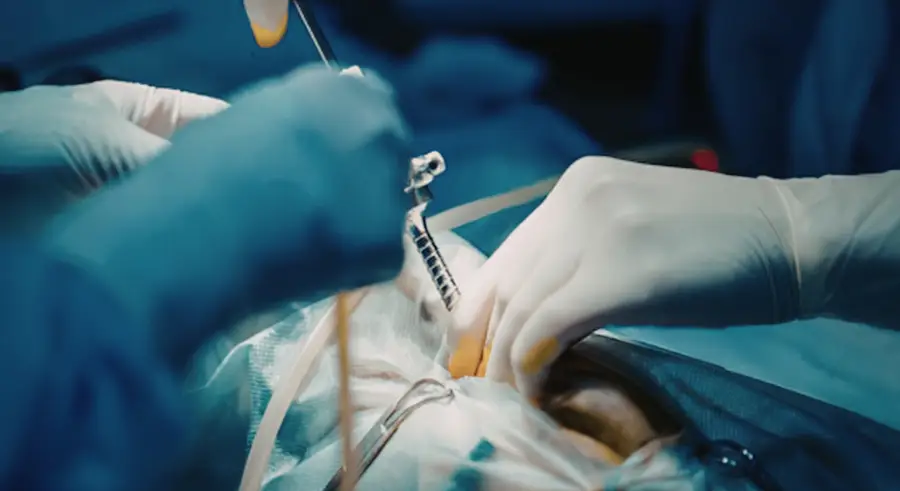
TURP is performed under spinal anaesthesia. A resectoscope (instrument with a camera and electrical loop) is passed through the urethra — no incisions. The enlarged prostate tissue is systematically removed using the electrical loop. Chips of tissue are flushed out. A urinary catheter is left for 1–3 days. TURP is highly effective for prostates up to approximately 80 grams. Hospital stay: 2–3 nights.
HoLEP — Holmium Laser Enucleation of the Prostate
HoLEP uses a holmium laser to enucleate (shell out) the entire enlarged inner prostate lobe in a single piece, rather than removing it chip by chip. The laser seals blood vessels as it works, causing significantly less bleeding than TURP. The enucleated tissue is then morcellated (broken into small pieces) and removed. HoLEP is effective for any size prostate, including very large glands (greater than 80 grams) where TURP is less effective. Catheter removed after 1–2 days. Hospital stay: 2–3 nights.
TURP (Transurethral Resection of the Prostate) and HoLEP (Holmium Laser Enucleation of the Prostate) are both highly effective treatments for an enlarged prostate, providing excellent symptom relief in about 85–90% of patients. TURP is generally recommended for prostates up to 80 grams, while HoLEP can be performed on prostates of any size. HoLEP has a lower risk of bleeding compared to TURP, making it a preferred option for patients taking blood-thinning medications. The catheter is typically removed within 1–2 days after HoLEP, compared to 2–3 days after TURP. Hospital stay is usually similar for both procedures, averaging 2–3 nights. In terms of long-term outcomes, TURP has a recurrence rate of approximately 5–15% over 10 years, whereas HoLEP has a recurrence rate of less than 1%, making it a durable treatment option.
What Happens to Sexual Function After Prostate Surgery?
This is the question men most frequently ask privately. Here is the honest answer:
- Retrograde ejaculation (dry orgasm) — semen goes backward into the bladder instead of forward during orgasm — occurs in 70–90% of patients after TURP and HOLEP. Orgasm still occurs and is usually pleasurable, but there is no visible ejaculation. This is permanent.
- Erectile function — TURP and HoLEP are not designed to affect the nerves controlling erections. Erectile dysfunction is not a typical result of these procedures. Pre-existing erectile problems are not improved by prostate surgery.
- Urinary continence — temporary mild stress leakage is common for the first few weeks and typically resolves with pelvic floor exercises.
Struggling with urinary symptoms or have been recommended prostate surgery? Our urology team at SRM Prime Hospital provides confidential, expert consultation and advanced HoLEP laser prostate surgery.
Book Appointment: srmhospitals.com | Call: 044 3545 3545 | Emergency: 044 3500 3500
Frequently Asked Questions (FAQ)
Will I need a catheter after prostate surgery?
Yes, temporarily. After TURP, a catheter typically stays for 2–3 days. After HoLEP, it is usually removed after 1–2 days. Most patients urinate well once the catheter is removed.
Does prostate surgery cause permanent incontinence?
Permanent incontinence is rare — less than 1–2% after TURP or HoLEP, with increased risk in patients with associated medical disorders. Temporary leakage in the first few weeks is common and improves with pelvic floor exercises.
Is prostate surgery the same as prostate cancer surgery?
No. TURP and HoLEP treat benign prostatic hyperplasia (BPH) — a non-cancerous enlargement. Prostate cancer surgery (radical prostatectomy) is a different, more extensive operation.
How long does prostate surgery take?
TURP takes approximately 45–90 minutes depending on prostate size. HoLEP takes 60–120 minutes. Both are performed under spinal anaesthesia.
How long before symptoms improve after prostate surgery?
Most men notice significant improvement in urine flow immediately once the catheter is removed. Night-time frequency and urgency improve over the following weeks to months as the bladder recovers from years of obstruction, which will be treated with medicines.













-vs-ESWL-Which-Procedure-is-Right-for-You.webp)









.webp)
.webp)

.webp)
+(1).webp)
.webp)