
-vs-ESWL-Which-Procedure-is-Right-for-You.webp)
Not all kidney stones are treated the same way. The choice of procedure depends on the stone's size, location, density, and the anatomy of the kidney — and getting this decision right makes the difference between a single successful treatment and/or the need for repeated procedures. This guide explains the three main kidney stone surgical options available at SRM Prime Hospital and how the right treatment is chosen for you.
Key Takeaways
- Stones smaller than 5mm often pass on their own with fluids and medication — no surgery needed.
- Stones 5–20mm are most commonly treated with URS/RIRS laser lithotripsy — a keyhole technique through the urethra.
- Stones larger than 20mm and staghorn calculi are best treated with PCNL — a keyhole through the back.
- SRM Prime Hospital offers all three modalities — the most appropriate is chosen based on your specific stone characteristics.
Overview of the Three Main Procedures
Procedure
- URS/RIRS (Retrograde Intrarenal Surgery) – Laser
- PCNL (Percutaneous Nephrolithotomy)
Method
- URS/RIRS: Laser fibre passed through the urethra and ureter.
- PCNL: Small hole created through the back into the kidney.
Hospital Stay
- URS/RIRS: Day surgery – discharged on the same day.
- PCNL: Requires 1–2 nights of hospital stay.
URS/RIRS — Laser Lithotripsy Through the Urethra (Semi-Rigid and Flexible Ureteroscopy)
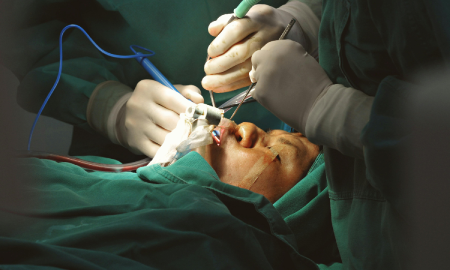
RIRS is performed under general or spinal anaesthesia. A Semi-Rigid and flexible scope — thinner than a pencil — is passed through the urethra, bladder, and ureter into the kidney. A laser fibre is then used to dust the stone (break it into very fine powder that passes in urine) or break it into small fragments that are removed with a basket. No incisions. A temporary ureteric stent (DJ stent) is left for 1–4 weeks to protect the healing ureter. Day surgery — return home the same day or the next morning.
PCNL — Through a Small Hole in the Back
PCNL is performed under general anaesthesia. A 1 cm incision is made in the back, and a tract is created through the skin into the kidney under X-ray guidance. A nephroscope is inserted, and the stone is broken with ultrasonic, pneumatic, or laser energy, then removed through the tract. A drain (nephrostomy tube) may be left for 1–2 days. Hospital stay: 1-2 nights. Mini-PCNL and ultra-mini-PCNL use even smaller tracts, reducing blood loss and recovery time.
Comparison Point & Details
Best Stone Size
- URS/RIRS: 5–20 mm stones
- PCNL: Stones larger than 20 mm
Anaesthesia
- URS/RIRS: General or spinal anaesthesia
- PCNL: General anaesthesia
Hospital Stay
- URS/RIRS: Same-day discharge
- PCNL: 1–2 days hospital stay
Stone-Free Rate
- URS/RIRS: 90–95%
- PCNL: 90–98%
Upper Pole Stones
- URS/RIRS: Excellent outcomes
- PCNL: Excellent outcomes
Staghorn Stones
- URS/RIRS: Limited suitability
- PCNL: Highly suitable
Return to Work
- URS/RIRS: 3–5 days
- PCNL: Around 1 week
DJ Stent — What Is It and Why Is It Needed?
A DJ (double J) stent is a soft plastic tube placed inside the ureter (the tube from the kidney to the bladder) after URS/RIRS or PCNL. It keeps the ureter open while it heals and helps stone fragments pass. The stent causes symptoms — urinary urgency, frequency, and mild discomfort — that resolve when it is removed in clinic (usually 1–4 weeks after surgery, under local anaesthesia).
Diagnosed with a kidney stone? Our urology team at SRM Prime Hospital will recommend the most appropriate, minimally invasive treatment based on your stone's specific characteristics. Same-day ultrasound and CT available.
Book Appointment: srmhospitals.com | Call: 044 3545 3545 | Emergency: 044 3500 3500
Frequently Asked Questions (FAQ)
Can kidney stones come back after surgery?
Yes. The stone formation tendency is often metabolic (related to diet, fluid intake, or a metabolic abnormality). After successful stone removal, urine analysis and blood tests identify the underlying cause, and dietary and medication measures are recommended to prevent recurrence.
How painful is kidney stone surgery?
URS/RIRS causes mild urinary discomfort for a few days after surgery (managed with oral medication). PCNL causes more significant back and side discomfort managed with regular analgesia in the hospital.
How long does the DJ stent stay in?
Typically 1–4 weeks, depending on the procedure and your ureter's healing. The stent is removed in clinic with a small flexible camera — no anaesthesia needed — in approximately 5 minutes.
What is the best diet to prevent kidney stones?
Drink 2.5–3 litres of water daily (the most important measure). Reduce salt and animal protein. For calcium oxalate stones (most common): limit high-oxalate foods like spinach, tomatoes, and nuts. For uric acid stones: reduce red meat, shellfish, and alcohol.
Can a 10mm kidney stone pass on its own?
A 10mm stone is unlikely to pass spontaneously — the ureter is typically 3–4mm wide at its narrowest point. Medical expulsive therapy (tamsulosin) helps passage of borderline stones (5–7mm), but stones of 10mm almost always require intervention.




















.webp)
.webp)

.webp)
+(1).webp)
.webp)