

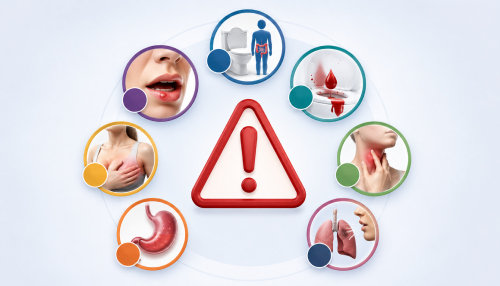
Cancer is most treatable — and often curable — when detected early. Yet many Indians delay seeking medical attention due to fear, stigma, or dismissing symptoms as 'nothing serious.' Knowing the warning signs and acting on them promptly is the most important step anyone can take. This article outlines the seven most important cancer warning signs according to medical guidelines.
Key Takeaways
- Early-stage cancer often causes no pain, which is why recognising subtle warning signs matters
- Most symptoms listed here are NOT cancer — but they need to be evaluated to rule it out
- Regular cancer screenings (colonoscopy, mammogram, Pap smear, PSA) catch cancer before symptoms appear
- SRM Prime Hospital offers comprehensive cancer screening packages
The 7 Warning Signs of Cancer (CAUTION)
- C — Change in bowel or bladder habits lasting more than 2 weeks
- A — A sore or ulcer that does not heal within 3 weeks (in the mouth, on the skin)
- U — Unusual bleeding or discharge (blood in urine, stool, sputum, or abnormal vaginal bleeding)
- T — Thickening or lump in the breast, testicle, or anywhere else in the body
- I — Indigestion or difficulty swallowing that persists
- O — Obvious change in a wart or mole (change in size, colour, shape, or bleeding)
- N — Nagging cough or hoarseness of voice lasting more than 3 weeks
Additional Warning Signs
- Unexplained weight loss of more than 10% of body weight in 6 months
- Persistent fatigue that does not improve with rest
- Persistent pain with no clear cause
- Unexplained fever that comes and goes
- Night sweats
Cancer Screening Recommendations for Indians
- Breast cancer: Mammogram every 1–2 years from age 40 (or earlier with family history)
- Cervical cancer: Pap smear every 3 years from age 21; HPV testing from age 30
- Colorectal cancer: Colonoscopy every 10 years from age 45
- Oral cancer: Regular dental and oral examinations; especially important for tobacco/betel nut users
- Lung cancer: Low-dose CT screening for heavy smokers aged 50–80
- Prostate cancer: PSA blood test discussion from age 50 (or 45 with family history)
Early detection saves lives. Book a cancer screening consultation at SRM Prime Hospital today.
Book an Appointment: srmhospitals.com | Call: 044 3545 3545
Frequently Asked Questions
Does cancer always cause pain?
No. Many early-stage cancers are completely painless. Pain typically develops in later stages when cancer invades surrounding tissues. This is why screening is so important even without symptoms.
Is a lump always cancer?
No. The vast majority of lumps are benign (non-cancerous) — cysts, lipomas, lymph node swellings, or fibroadenomas in women. However, every new lump should be evaluated by a doctor to determine whether it needs further investigation.
Can blood tests detect cancer?
Some cancers have tumour markers (CA-125 for ovarian, PSA for prostate, AFP for liver). However, no single blood test can screen for all cancers reliably. Imaging and biopsy remain essential for diagnosis.
Is cancer hereditary?
About 5–10% of cancers have a strong hereditary component. BRCA1/BRCA2 mutations increase breast and ovarian cancer risk. Lynch syndrome increases colorectal cancer risk. Genetic counselling is available at SRM Prime Hospital for high-risk families.
What is the most common cancer in India?
Among women, breast cancer is the most common. Among men, oral (mouth) cancer related to tobacco use is a major concern in India. Cervical cancer, colorectal cancer, and lung cancer are also among the most prevalent.
















-vs-ESWL-Which-Procedure-is-Right-for-You.webp)










.webp)
.webp)

.webp)
+(1).webp)
.webp)