

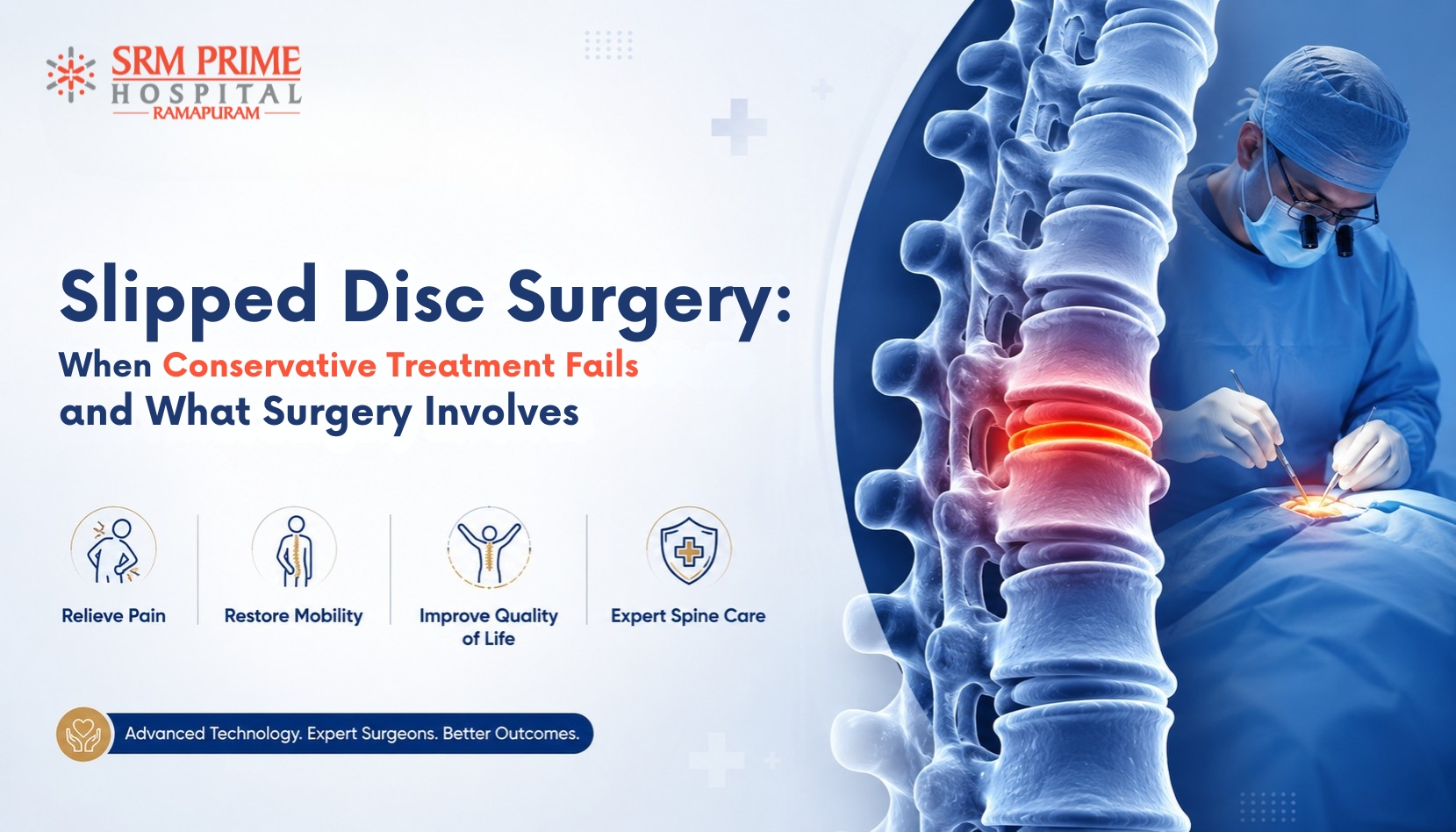
The fear of spine surgery stops many people from getting the relief they need. The words 'slipped disc surgery' conjure images of complex, risky operations with long recovery. The reality today is very different. Microdiscectomy — the gold standard surgery for disc herniation — is a minimally invasive procedure through a small incision, performed in 45–60 minutes, with most patients walking the same day and going home within 24–48 hours. Let us separate fact from fear.
Key Takeaways
- 85–90% of disc herniations improve with conservative treatment within 6–12 weeks — surgery is not always needed.
- Surgery is recommended when there is severe or worsening neurological weakness, or when pain has not improved after 6 weeks of proper conservative treatment
- Microdiscectomy is minimally invasive — a small incision in the back, with surgical microscope magnification
- Most patients go home within 24–48 hours and can return to desk work in 2–4 weeks
- Surgery relieves the nerve pain (sciatica) very effectively — back pain improvement may be more gradual
What Is a Slipped Disc? Understanding the Anatomy
Each spinal disc acts as a shock absorber between the vertebrae — a tough outer ring (annulus fibrosus) with a soft gel centre (nucleus pulposus). A 'slipped disc' (disc herniation or prolapse) occurs when the outer ring weakens or tears, allowing the inner gel to bulge or leak out. This disc material presses on nearby nerves, causing pain, numbness, or weakness along the nerve's path — down the arm (cervical disc) or down the leg (lumbar disc, causing sciatica).
Symptoms That Suggest Surgery May Be Needed
- Sciatica (pain radiating from the lower back through the buttock and down the leg) that is severe and not improving after 6–8 weeks of physiotherapy and medication.
- Progressive weakness in the foot or leg — difficulty walking on tiptoe or heels.
- Numbness that is worsening or causing loss of sensation in the foot.
URGENT — Seek emergency care immediately for these 'red flag' disc symptoms:
- Loss of bladder or bowel control (inability to urinate or pass stools) — this is cauda equina syndrome, a surgical emergency.
- Weakness in BOTH legs.
- Saddle anaesthesia — numbness in the groin, inner thighs, and perineum.
Conservative Treatment First — What Must Be Tried Before Surgery
- Rest modification — avoid activities that worsen pain, but do not completely rest
- Physiotherapy — targeted core strengthening and nerve mobilisation exercises
- Pain medication — NSAIDs (ibuprofen, diclofenac), muscle relaxants, neuropathic pain agents (gabapentin)
- Epidural steroid injection — placed near the affected nerve root; reduces inflammation and buys time for natural healing
If these measures fail after 6–12 weeks, or if neurological deficits are worsening, surgery is the next step.
Microdiscectomy — What the Surgery Involves
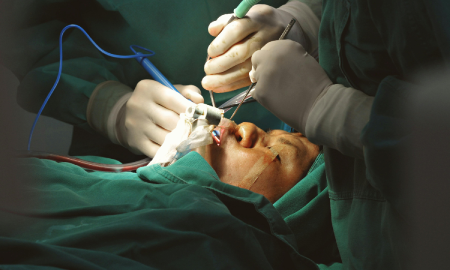
Microdiscectomy is performed under general anaesthesia with the patient lying face down. A 2–3 cm incision is made in the back over the affected disc level. Microscope or endoscope magnification allows precise visualisation. A small amount of muscle is gently retracted. A portion of the bone covering the nerve (lamina) may be removed for access. The herniated disc fragment pressing on the nerve is removed. The surgery takes 45–75 minutes.
Microdiscectomy – Key Facts
- Incision Size: 2–3 cm, much smaller than traditional open surgery.
- Hospital Stay: Usually 1–2 nights.
- Walking: Patients can usually walk on the same day as surgery.
- Return to Desk Work: Approximately 2–4 weeks.
- Return to Physical Work: Approximately 6–12 weeks.
- Success Rate for Sciatica: 90–95% relief of leg pain.
- Back Pain Improvement: Around 60–70%, with improvement generally more gradual than leg pain relief.
Recovery After Disc Surgery
- Day 1: Walking begins in the hospital — gentle, short distances. Mild back soreness at the incision site.
- Days 2–3: Home with oral pain medication. Short walks every 2 hours.
- Week 2–4: Gradually increasing walking. Avoid lifting more than 5 kg. No bending or twisting.
- Month 1–2: Physiotherapy begins — strengthening the core muscles that protect the spine.
- Month 2–3: Return to desk work and driving.
- Month 3–6: Return to light physical work and moderate exercise.
Note: Sciatica (leg pain) typically improves rapidly after surgery — often within days. Back pain takes longer to resolve and depends on how long the nerve was under pressure before surgery.
Suffering from severe sciatica or nerve pain in the leg? Our spine surgery team at SRM Prime Hospital offers MRI-guided assessment and minimally invasive disc surgery.
Book Appointment: srmhospitals.com | Call: 044 3545 3545 | Emergency: 044 3500 3500
Frequently Asked Questions (FAQ)
Will my slipped disc come back after surgery?
The same disc can re-herniate after microdiscectomy in approximately 5–10% of cases. However, a completely different disc level can also herniate in the future. Core strengthening physiotherapy and proper lifting technique are the most effective preventive measures.
Is spinal surgery dangerous?
Microdiscectomy is a well-established, safe procedure when performed by an experienced spine surgeon. Overall complication rates are low — less than 1% for serious complications. Understanding the specific risks for your case is part of the pre-operative discussion.
How do I know if I need surgery or just physiotherapy?
In general: if your sciatica is manageable and not worsening, try 6–8 weeks of physiotherapy and medication first. If you have progressive weakness (foot drop), severe pain unresponsive to medication and injections, or any loss of bladder/bowel control — seek surgical consultation immediately.
Can I prevent a slipped disc from occurring again?
Core strengthening exercises (building the muscles that protect the spine), correct lifting technique (using legs, keeping back straight), maintaining healthy weight, and avoiding prolonged sitting are the most evidence-based strategies for reducing disc herniation risk.
Is endoscopic spine surgery available at SRM Prime Hospital?
Yes. Our spine team offers both standard microdiscectomy and endoscopic / minimally invasive spine surgery options. Endoscopic techniques use even smaller incisions and may offer faster recovery in selected cases. Your surgeon will recommend the most appropriate approach for your specific disc problem.











-vs-ESWL-Which-Procedure-is-Right-for-You.webp)






.webp)
.webp)

.webp)
+(1).webp)
.webp)