
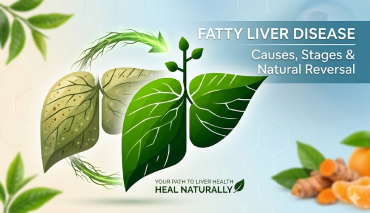
Fatty liver disease has become a silent epidemic in India. According to recent health screening data, 65% of individuals screened in 2024 had fatty liver — and alarmingly, over half of these cases showed completely normal liver enzyme levels on blood tests. This means the standard blood test is not enough to rule out fatty liver. Here is what you need to know.
Key Takeaways
- Fatty liver usually causes no symptoms until significant damage has occurred.
- Normal liver enzymes do NOT rule out fatty liver — ultrasound/fibro scan is needed.
- The early stages of fatty liver are completely reversible with diet and exercise.
- Untreated fatty liver can progress to cirrhosis and liver failure over 10–20 years.
- It can even increase the risk of liver cancer.
Symptoms of Fatty Liver Disease
In the early stages (simple steatosis), fatty liver is almost always silent. As it progresses to NASH (Non-Alcoholic Steatohepatitis), some people notice:
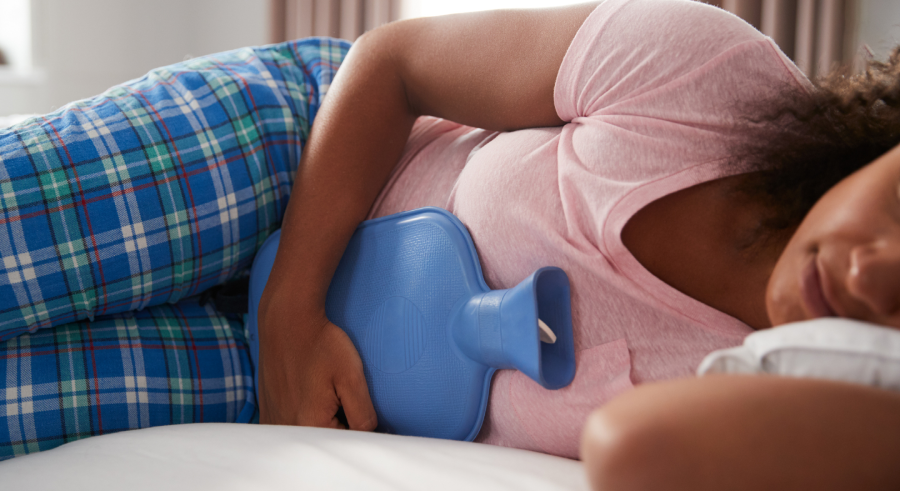
- Dull, vague discomfort or a feeling of heaviness in the upper right abdomen
- Fatigue without clear cause
- Weakness
- Nausea
When fatty liver progresses to cirrhosis, more serious symptoms appear: jaundice, swollen abdomen (ascites), easy bruising, and confusion. At this stage, damage is permanent.
Stages of Fatty Liver Disease
- Stage 1 — Simple steatosis: Fat accumulates in liver cells. No inflammation. Fully reversible.
- Stage 2 — NASH: Fat + inflammation and liver cell damage. Still mostly reversible with lifestyle changes.
- Stage 3 — Fibrosis: Scar tissue forms. Partially reversible.
- Stage 4 — Cirrhosis: Extensive scarring. Irreversible. May require liver transplant.
Who Is at Risk?
- People with obesity — particularly with abdominal (belly) fat
- People with type 2 diabetes or prediabetes
- People with high triglycerides or low HDL cholesterol
- Those with metabolic syndrome (combination of high BP, high sugar, abnormal cholesterol, abdominal obesity)
- Heavy alcohol drinkers (alcoholic fatty liver disease)
- People on certain medications — corticosteroids, some chemotherapy drugs
How to Reverse Fatty Liver
- Lose 7–10% of body weight — the most effective intervention proven to reduce liver fat.
- Follow a Mediterranean-style diet — olive oil, fish, whole grains, vegetables, legumes, nuts.
- Cut out sugary drinks including sodas, fruit juices, and sweetened chai.
- Eliminate alcohol completely — even moderate alcohol worsens liver inflammation.
- Exercise 150–300 minutes per week — both cardio and resistance training help.
- Control diabetes and blood pressure — these directly affect liver health.
Get your liver health assessed at SRM Prime Hospital. A fibro scan (liver stiffness test) is available — more accurate than a standard ultrasound for detecting liver fibrosis.
Book an Appointment: srmhospitals.com | Call: 044 3545 3545
Frequently Asked Questions
Can fatty liver be detected by a blood test?
Not reliably. Liver enzyme tests (ALT, AST) are normal in up to 50% of people with fatty liver. An abdominal ultrasound, Fibro Scan, or liver biopsy is needed for accurate diagnosis.
Is fatty liver dangerous?
In its early stages, fatty liver is reversible and not immediately dangerous. However, if left untreated, it can progress over 10–20 years to cirrhosis (permanent scarring) and liver failure, which can be fatal.
Can you have fatty liver without being overweight?
Yes. Lean fatty liver — also called NAFLD in people with normal BMI — occurs in an estimated 10–15% of cases in India. It is linked to visceral fat (fat around internal organs) rather than overall body weight.
How long does it take to reverse fatty liver?
With significant lifestyle changes, liver fat can begin to reduce within 3–6 months. Full reversal of early-stage fatty liver typically takes 1–2 years of sustained lifestyle change.
Does coffee help fatty liver?
Interestingly, yes. Studies show that drinking 2–3 cups of unsweetened black coffee per day is associated with a lower risk of liver fibrosis. This is one of few dietary factors with strong evidence for liver protection.





-vs-ESWL-Which-Procedure-is-Right-for-You.webp)

.webp)
.webp)
.webp)
+(1).webp)
.webp)