
A stroke is a brain attack. Every minute that passes without treatment, approximately 1.9 million brain cells die. Stroke is India's second-leading cause of death and a leading cause of adult disability. Yet up to 80% of strokes are preventable — and those that do occur can have far better outcomes with fast treatment. The key is knowing the signs.
Key Takeaways
• The BEFAST test is the easiest way to recognise a stroke: Balance, Eyes, Face, Arms, Speech, Time
• Treatment must begin within 4.5 hours of symptom onset for clot-busting therapy to work
• Stroke symptoms are sudden — they come on in seconds to minutes, not gradually
• Call SRM Prime Hospital Emergency (044 3500 3500) at the first sign — do NOT wait
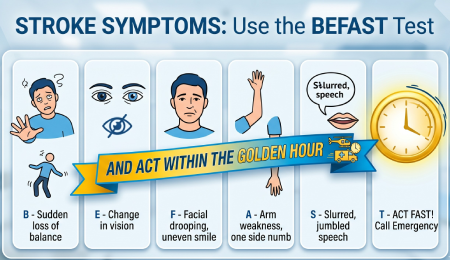
The BEFAST Test — Recognise Stroke in Seconds
B — Balance: Sudden loss of balance or coordination, dizziness, or trouble walking
E — Eyes: Sudden vision problems in one or both eyes (blurred or double vision)
F — Face: Ask the person to smile. Does one side of the face droop?
A — Arms: Ask them to raise both arms. Does one arm drift downward or cannot be raised?
S — Speech: Ask them to repeat a simple phrase. Is their speech slurred, strange, or are they unable to speak?
T — Time: If you see any of these signs, call emergency services immediately.
Other Stroke Symptoms to Know
• Sudden numbness or weakness of the face, arm, or leg — especially on one side of the body
• Sudden confusion or trouble understanding what others are saying
• Sudden vision problems — in one or both eyes
• Sudden severe headache with no known cause
• Sudden trouble walking, dizziness, loss of balance or coordination
What is a Mini-Stroke (TIA)?
A TIA (Transient Ischaemic Attack) causes the same symptoms as a stroke but they resolve within minutes to hours, leaving no permanent damage. A TIA is a serious warning sign — up to 20% of people who have a TIA will have a full stroke within 90 days. A TIA must be treated as an emergency and investigated the same day.
Stroke Risk Factors You Can Control
• High blood pressure — the single biggest risk factor for stroke
• Atrial fibrillation (irregular heart rhythm) — increases stroke risk fivefold
• Diabetes and high cholesterol
• Smoking — doubles stroke risk
• Obesity and physical inactivity
• Excessive alcohol consumption
Frequently Asked Questions
What is the golden hour for stroke treatment?
The 'golden hour' refers to the first 0 - 3 hours after symptom onset, when clot-busting treatment (tPA) and mechanical thrombectomy are most effective at saving brain tissue and preventing disability.
Can a young person have a stroke?
Yes. While stroke risk increases with age, strokes are increasingly occurring in people under 45 in India. Risk factors include undetected heart conditions, high blood pressure, drug use, and hormonal contraceptives.
What happens after a stroke?
Stroke survivors may face weakness, speech difficulties, cognitive changes, and emotional challenges. Intensive rehabilitation — starting as early as 24 hours after a stroke — significantly improves recovery. SRM Prime Hospital offers physiotherapy, speech therapy, and occupational therapy.
Is snoring linked to stroke?
Yes. Obstructive sleep apnoea — which causes snoring and interrupted breathing during sleep — is an independent risk factor for stroke. Getting it evaluated and treated can meaningfully reduce stroke risk.
Can stress cause a stroke?
Chronic stress is a risk factor for stroke through its effects on blood pressure, inflammation, and lifestyle choices. Acute, extreme stress (such as sudden emotional shock) can also trigger stroke in vulnerable individuals.



-vs-ESWL-Which-Procedure-is-Right-for-You.webp)

.webp)
.webp)

.webp)
+(1).webp)
.webp)