
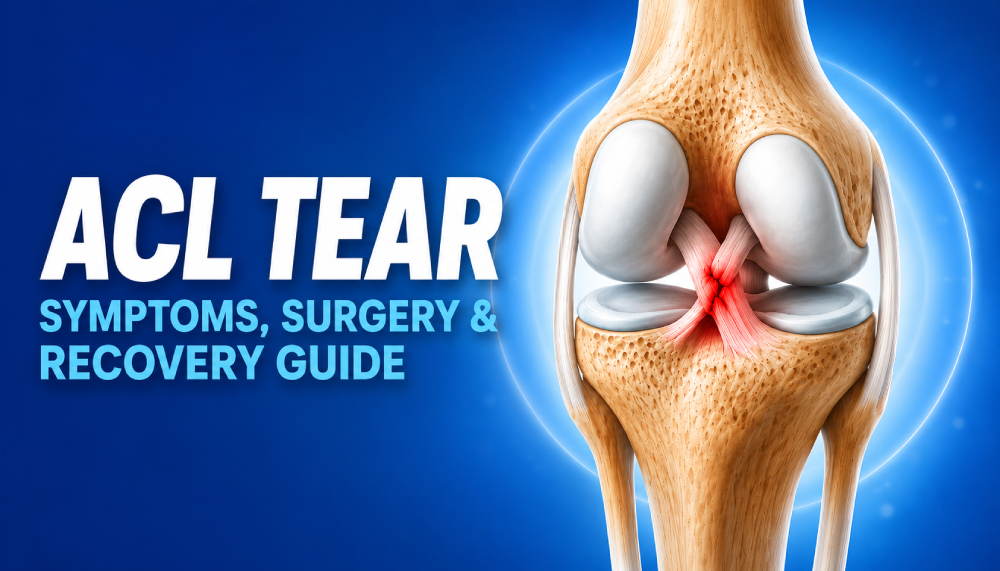
An ACL (anterior cruciate ligament) tear is one of the most common and feared sports injuries in India — affecting cricketers, footballers, badminton players, gym enthusiasts, and even people who simply step off a kerb at the wrong angle. The good news: arthroscopic ACL reconstruction is a highly effective procedure with excellent outcomes. With the right surgery and the right rehabilitation, the majority of patients return to their pre-injury sport and activity level.
Key Takeaways
- The ACL cannot heal itself — if you want to return to cutting sports or high-demand activity, reconstruction is almost always recommended.
- Arthroscopic ACL reconstruction uses keyhole surgery — 2–3 small holes in the knee, no large incisions.
- The graft (replacement ligament) integrates into the knee over 9–12 months — this is why return to sport takes this long.
- Rehabilitation after ACL surgery is as important as the surgery itself — it cannot be rushed.
- SRM Prime Hospital offers arthroscopic ACL reconstruction with bone-patellar tendon-bone (BPTB) and hamstring tendon grafts.
What Is the ACL and Why Does It Matter?
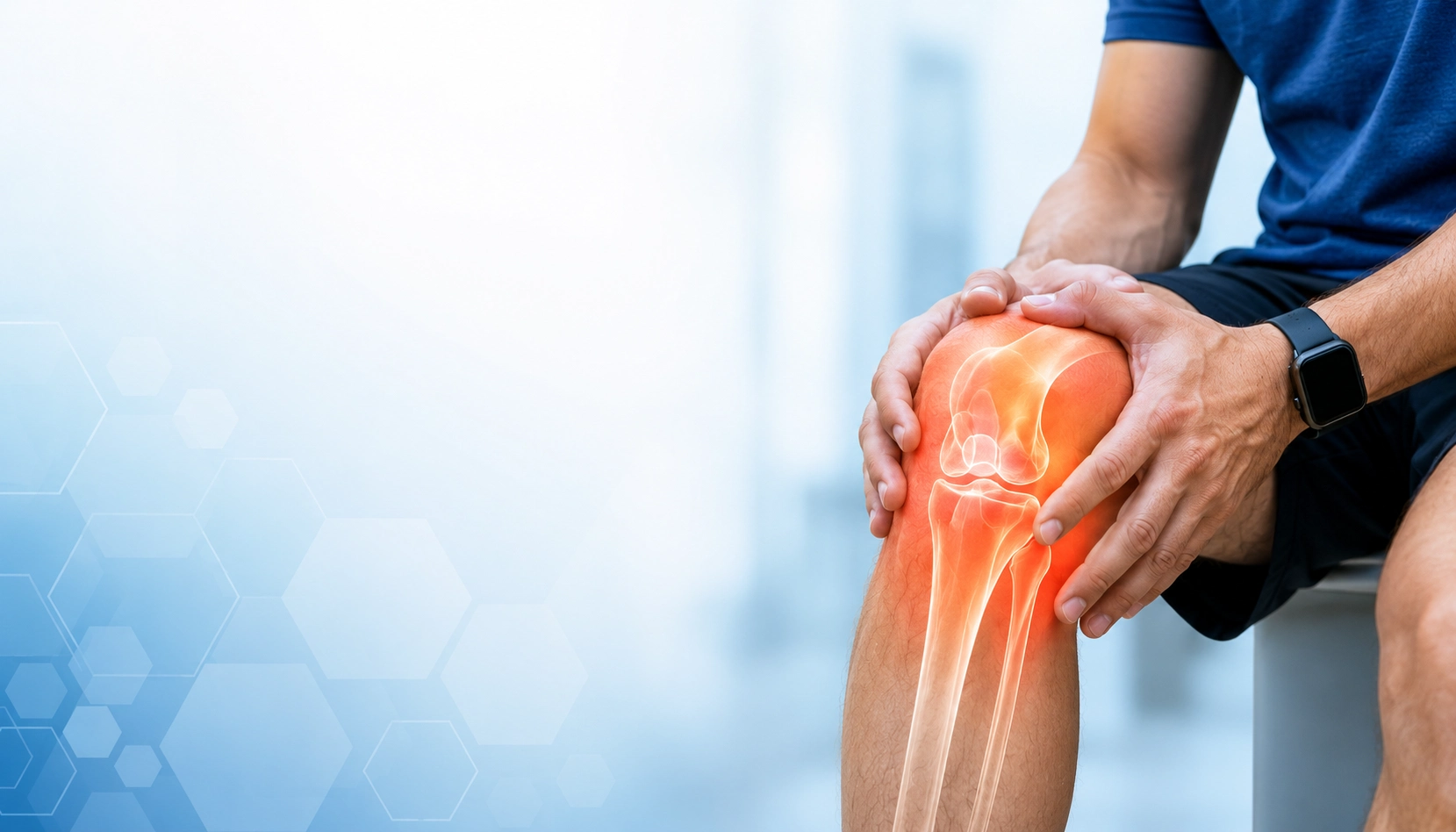
The ACL is one of four major ligaments in the knee, running diagonally through the middle of the joint. It stabilises the knee during pivoting, cutting, jumping, and sudden stops. When the ACL tears — usually during a non-contact pivot, sudden direction change, or landing from a jump — there is often a 'pop' heard, followed by immediate swelling, instability, and inability to continue the activity.
Symptoms of ACL Tear
- An audible or felt 'pop' at the moment of injury.
- Rapid swelling of the knee within 2–6 hours (haemarthrosis — blood in the joint).
- Severe pain immediately after injury, then variable pain as swelling increases.
- Feeling that the knee is 'giving way' or unstable during activity.
- Inability to continue playing or walking comfortably.
Do I Need ACL Surgery?
Not everyone with an ACL tear needs surgery. The decision depends on:
- Age and activity level — young, active patients who want to return to sport almost always benefit from reconstruction.
- Degree of instability — if the knee is significantly unstable with daily activities, surgery is recommended.
- Associated injuries — meniscus tears or cartilage damage (common with ACL tears) are treated at the same time during arthroscopy.
- Professional requirements — athletes, military personnel, or those with physically demanding jobs are strongly advised to have reconstruction.
- Older or less active patients with minimal instability may manage with physiotherapy and activity modification.
Arthroscopic ACL Reconstruction — The Procedure
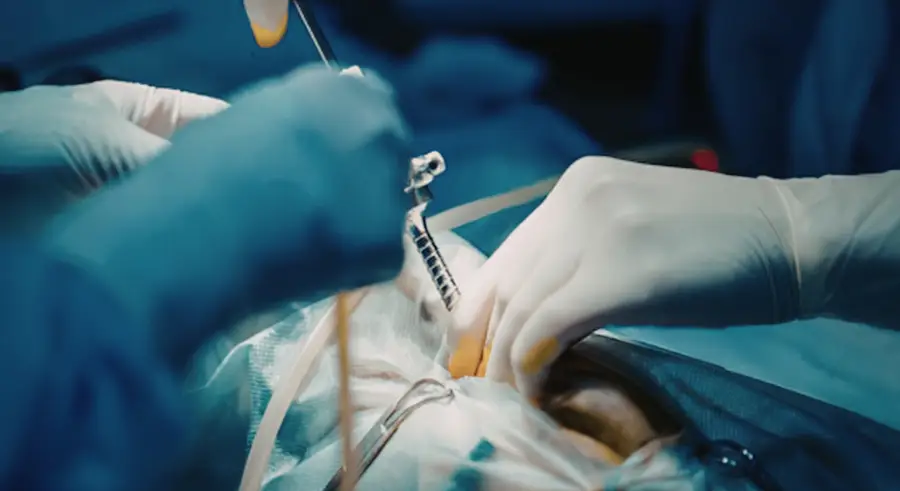
Arthroscopic ACL reconstruction is performed under spinal or general anaesthesia. Two to three tiny incisions (portals) are made around the knee. A camera and some specialised instruments are inserted. The torn ACL is trimmed. A graft — either from your own hamstring tendon or patellar tendon — is harvested, shaped, and threaded through precisely drilled tunnels in the femur and tibia. It is fixed in position with screws or other fixation devices. The surgery takes approximately 60–90 minutes.
Phase 1 (Weeks 1–2):
- Goal: Reduce swelling and regain full knee extension
- Key Activities: Ice therapy, leg elevation, quad sets, straight leg raises
Phase 2 (Weeks 3–6):
- Goal: Regain range of motion and improve strength
- Key Activities: Cycling, pool walking, progressive strengthening exercises
Phase 3 (Months 2–4):
- Goal: Improve neuromuscular control
- Key Activities: Balance training, gym exercises, light jogging
Phase 4 (Months 4–6):
- Goal: Sport-specific conditioning
- Key Activities: Running drills, agility training, change-of-direction exercises
Phase 5 (Months 6–9):
- Goal: Return to training
- Key Activities: Sport-specific practice sessions, contact drills
Phase 6 (Months 9–12):
- Goal: Return to competitive sports
- Key Activities: Clearance by surgeon and physiotherapist after functional testing
Common ACL rehabilitation mistakes that delay recovery:
- Returning to sport before the graft has matured (before 9–12 months)
- Skipping physiotherapy sessions — this is the most preventable cause of poor outcomes
- Progressing too fast between phases — the graft is at its weakest at 6–8 weeks
- Neglecting the uninjured leg — symmetry between both legs is essential before return to sport
Suffered a knee injury or ACL tear? Our sports medicine and orthopaedic team at SRM Prime Hospital offer same-day MRI evaluation and expert ACL surgery consultation.
Book Appointment: srmhospitals.com | Call: 044 3545 3545 | Emergency: 044 3500 3500
Frequently Asked Questions (FAQ)
How long after ACL surgery can I return to cricket or football?
Full return to competitive sport typically takes 9–12 months after ACL reconstruction. This timeline is based on graft maturation biology — the new ligament goes through a weakening then strengthening phase. Returning too early significantly increases re-tear risk.
Which is better — hamstring graft or bone-patellar tendon-bone graft for ACL?
Both are effective. Bone-patellar tendon-bone (BPTB) graft has a strong bone-to-bone healing and is preferred for elite athletes and patients with high instability demands. Hamstring tendon graft has less donor-site morbidity (less anterior knee pain) and is preferred for many recreational athletes. Your surgeon will recommend based on your specific anatomy and activity goals.
Can a re-torn ACL be repaired again?
Yes. Revision ACL reconstruction is possible but is more technically challenging. Outcomes are slightly less predictable than primary ACL surgery. Using a different graft source from the first operation is usually recommended.
Will my knee be normal after ACL surgery?
The majority of patients achieve close-to-normal knee function. However, even with perfect surgery and rehabilitation, the risk of knee osteoarthritis is slightly higher long-term after an ACL injury compared to a knee that was never injured — particularly if there was associated meniscal or cartilage damage.
Can ACL surgery be done without putting me completely to sleep?
Yes. Most ACL reconstructions at SRM Prime Hospital are performed under spinal anaesthesia (an injection in the lower back that numbs from the waist down) combined with sedation. General anaesthesia is an alternative. You and the anaesthetist will discuss the best option for you.




-vs-ESWL-Which-Procedure-is-Right-for-You.webp)


.webp)
.webp)

.webp)
+(1).webp)
.webp)