

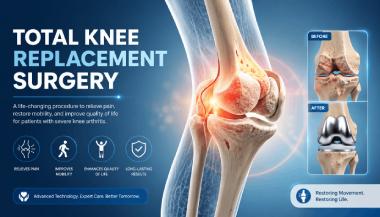
Knee replacement surgery (total knee arthroplasty) is one of the most successful operations in all of medicine — restoring mobility, eliminating pain, and transforming quality of life for patients suffering from advanced knee arthritis. At SRM Prime Hospital, our joint replacement team performs hundreds of knee replacements each year. This guide provides everything you need to know before you decide.
Key Takeaways
- Knee replacement is recommended when pain and stiffness significantly limit walking, climbing stairs, or sleep.
- Most patients are walking the day after surgery and discharged within 3–5 days.
- Full recovery and return to normal activities takes 3–6 months.
- Modern knee implants are designed to last 20–25 years in most patients.
- SRM Prime Hospital offers both conventional and robotic-assisted knee replacement
When Is Knee Replacement Surgery Recommended?
- Severe knee pain at rest, at night, or with minimal activity
- Significant stiffness that limits the ability to bend and straighten the knee
- Walking limited to less than 200–300 metres due to pain
- Cannot climb stairs or get in and out of a car comfortably
- X-ray showing advanced joint space narrowing or bone-on-bone arthritis
- Failed conservative treatments: physiotherapy, weight loss, anti-inflammatory medicines, and steroid or hyaluronic acid injections have not provided adequate relief
What Happens During Knee Replacement Surgery?
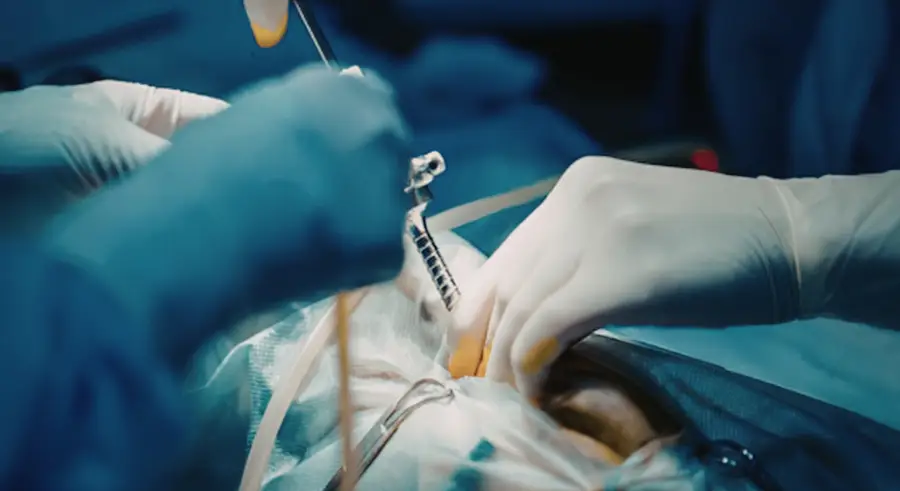
Total knee replacement surgery takes approximately 1.5–2 hours under spinal or general anaesthesia. The surgeon removes the damaged cartilage and a thin layer of bone from the end of the femur (thighbone), the top of the tibia (shinbone), and the underside of the patella (kneecap). Precisely shaped metal and plastic implant components are then cemented or press-fit into place. The implant recreates the smooth, gliding surface of a healthy knee. A drain may be placed to remove fluid, and the incision is closed with stitches.
Knee Replacement Recovery — Week by Week
- Day 1: Physiotherapy begins in the hospital. You will sit on the edge of the bed and attempt to stand with support. This is critical — early movement prevents blood clots and stiffness.
- Day 2–3: Walking with a walker. Physiotherapy twice daily. Ice and compression to reduce swelling.
- Day 4–5: Discharged home. Continue physiotherapy exercises at home 3–4 times daily.
- Week 2: Walking with a walker or stick. Able to manage stairs one at a time.
- Week 4–6: Most patients use only a walking stick. Driving may resume around Week 6 (left knee) or 8–10 (right knee — after confirmation from your surgeon).
- Month 3: Walking without support. Physiotherapy continues. Light exercises.
- Month 6: Full recovery for most patients. Return to social activities, light walking, and swimming.
- Month 12: Final assessment. Most patients achieve 90–120 degrees of knee bending — sufficient for all daily activities.
Conventional vs Robotic-Assisted Knee Replacement
- Implant Alignment: Conventional TKR uses manual measurements, while robotic-assisted TKR offers computer-guided robotic precision.
- Bone Removal: Traditional surgery uses mechanical guides, whereas robotic-assisted surgery uses a robotic arm with real-time feedback.
- Ligament Balance: Conventional procedures depend on the surgeon’s assessment, while robotic-assisted surgery includes digital sensor verification.
- Implant Fit Accuracy: Robotic-assisted TKR provides more precise implant positioning compared to conventional methods.
- Recovery: Rehabilitation is often faster with robotic-assisted knee replacement.
- Cost: Robotic-assisted TKR may cost slightly more than conventional surgery, but offers added precision and potential long-term benefits.
Exercises After Knee Replacement — Starting Day 1
- Ankle pumps — flex and point your feet, 10 times every hour — prevents blood clots
- Quad sets — tighten the thigh muscle, hold 5 seconds — starts on Day 1
- Straight leg raises — lying flat, raise leg 30 cm, hold, lower — starts Day 1–2
- Knee bends (seated) — sitting at the edge of bed, bend and straighten the knee — starts Day 2
- Standing knee bends with support — starts Day 3–4
Warning signs after knee replacement — call your surgeon:
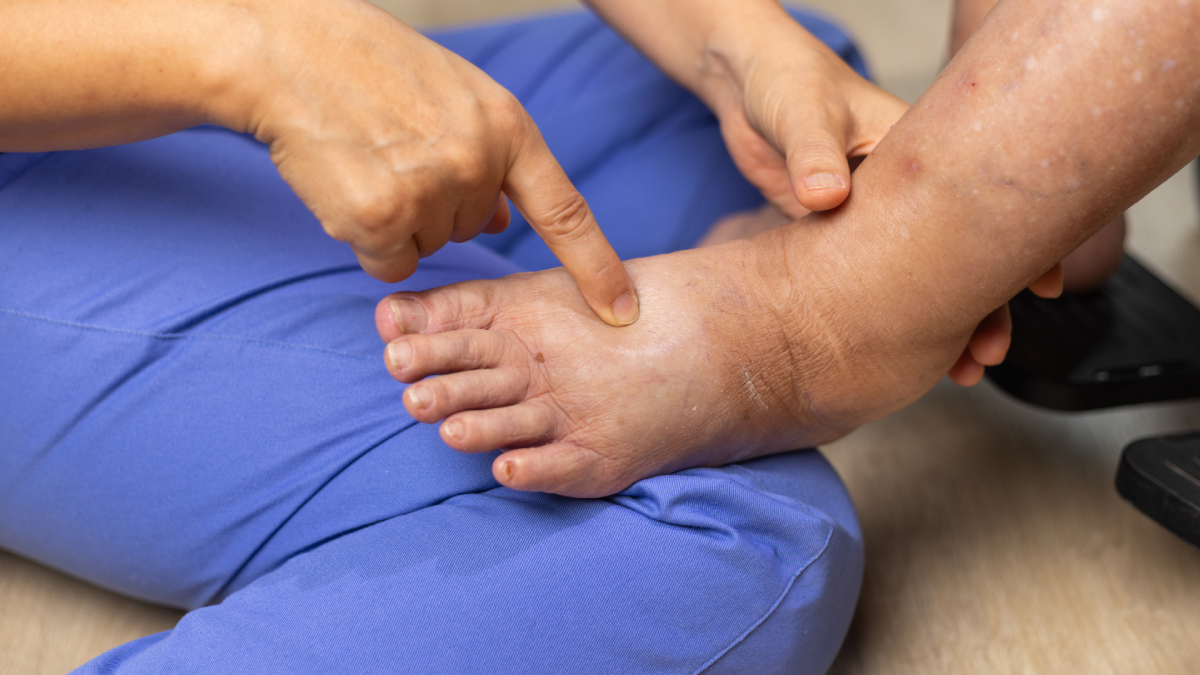
- Increasing calf pain, swelling, or redness — possible deep vein thrombosis (DVT).
- High fever above 38.5°C with wound redness or discharge — possible infection.
- Sudden severe pain in the replaced knee — possible implant issue
- Chest pain or breathlessness — possible pulmonary embolism
Has your doctor recommended knee replacement? Book a joint replacement consultation at SRM Prime Hospital to discuss conventional and robotic options with our expert team.
Book Appointment: srmhospitals.com | Call: 044 3545 3545 | Emergency: 044 3500 3500
Frequently Asked Questions (FAQ)
How long does a knee replacement last?
Modern knee implants are designed to last 20–25 years in the majority of patients. Longevity depends on patient weight, activity level, implant design, and surgical technique. Revision surgery (replacing the implant) is possible if the implant wears out.
At what age is knee replacement typically done in India?
Knee replacement is most commonly performed in patients aged 55–75. However, it can be done at any age when the pain and disability justify it. Younger patients may be offered high-flex implant designs to better accommodate active lifestyles.
Can I sit on the floor after knee replacement?
Most knee implants do not allow full squatting or sitting cross-legged on the floor (which requires more than 130–140 degrees of bending). Special high-flex implants or gender-specific designs allow greater bending and are discussed with your surgeon pre-operatively.
Is knee replacement surgery painful?
Modern pain management protocols — including spinal anaesthesia, nerve blocks, and post-operative analgesia — mean that patients experience significantly less pain than they typically anticipate. Most describe the pain as 'manageable discomfort' rather than severe pain after the first few days.
Can both knees be replaced at the same time?
Bilateral simultaneous knee replacement (both knees replaced in one operation) is offered to selected fit patients who have severe arthritis in both knees. It avoids two separate anaesthetics and hospital admissions but requires careful patient selection due to higher cardiopulmonary demands.










-vs-ESWL-Which-Procedure-is-Right-for-You.webp)








.webp)
.webp)

.webp)
+(1).webp)
.webp)